How to Start a Career in the Fitness Industry: Qualifications, Pathways, and Realistic Expectations
A comprehensive, step-by-step guide to breaking into the UK fitness industry. Understand the distinction between gym instructing and personal training, study options, and how to build a sustainable career.
Key Educational Takeaways
- Gym Instructor (Level 2 equivalent) is the standard entry requirement before progressing to full Personal Trainer (Level 3 equivalent) status.
- Theoretical knowledge alone is insufficient; practical coaching, communication, and movement analysis are the primary drivers of client retention.
- Aspiring fitness professionals should choose courses offering robust in-person or mentor-led practical assessment over 100% unmonitored multiple-choice tests.
- Career paths include commercial gym employment, freelance studio personal training, specialised strength coaching, and online consulting.
1. Understanding the UK Fitness Sector
The health and fitness sector in the United Kingdom has evolved significantly over the past two decades. What was once seen primarily as a recreational pastime is now recognised as a critical component of public preventative health, athletic development, and community wellbeing.
For individuals aspiring to enter this field, this evolution brings both opportunity and responsibility. Modern fitness consumers expect far more than someone who simply counts repetitions or demonstrates machine usage. They seek knowledgeable, empathetic professionals who understand human anatomy, biomechanics, progressive overload, and behavioural psychology.
2. The Core Qualification Pathway
To practice professionally and obtain mandatory public liability insurance in the UK, fitness professionals typically follow a structured education pathway:
- Foundational Level (Gym Instructor): Focuses on gym floor safety, equipment instruction (cardio and fixed resistance), basic warm-ups, and conducting initial member inductions.
- Practitioner Level (Personal Trainer): Focuses on comprehensive 1-to-1 client screening, postural assessment, bespoke exercise programming, periodisation, nutrition fundamentals, and business practice.
- Specialist Pathways (CPD & S&C): Advanced study in areas such as Strength & Conditioning, Biomechanics, Exercise for Older Adults, Pre/Post-Natal Care, and Nutrition.
Attempting to skip foundational learning often leaves coaches with blind spots in exercise regression, client communication, and basic safety protocols.
3. Choosing the Right Study Format
Fitness education courses are typically delivered in one of three formats:
- Blended Learning (Recommended): Combines flexible digital theory study with mandatory in-person practical workshops and supervised coaching assessments.
- Full-Time Intensive: Immersive daily attendance over several weeks; effective for those who can dedicate full-time hours.
- Pure Distance Learning: Fully online study; while convenient, candidates must ensure there is robust video-based practical assessment to verify real coaching ability.
4. Developing Real-World Practical Competence
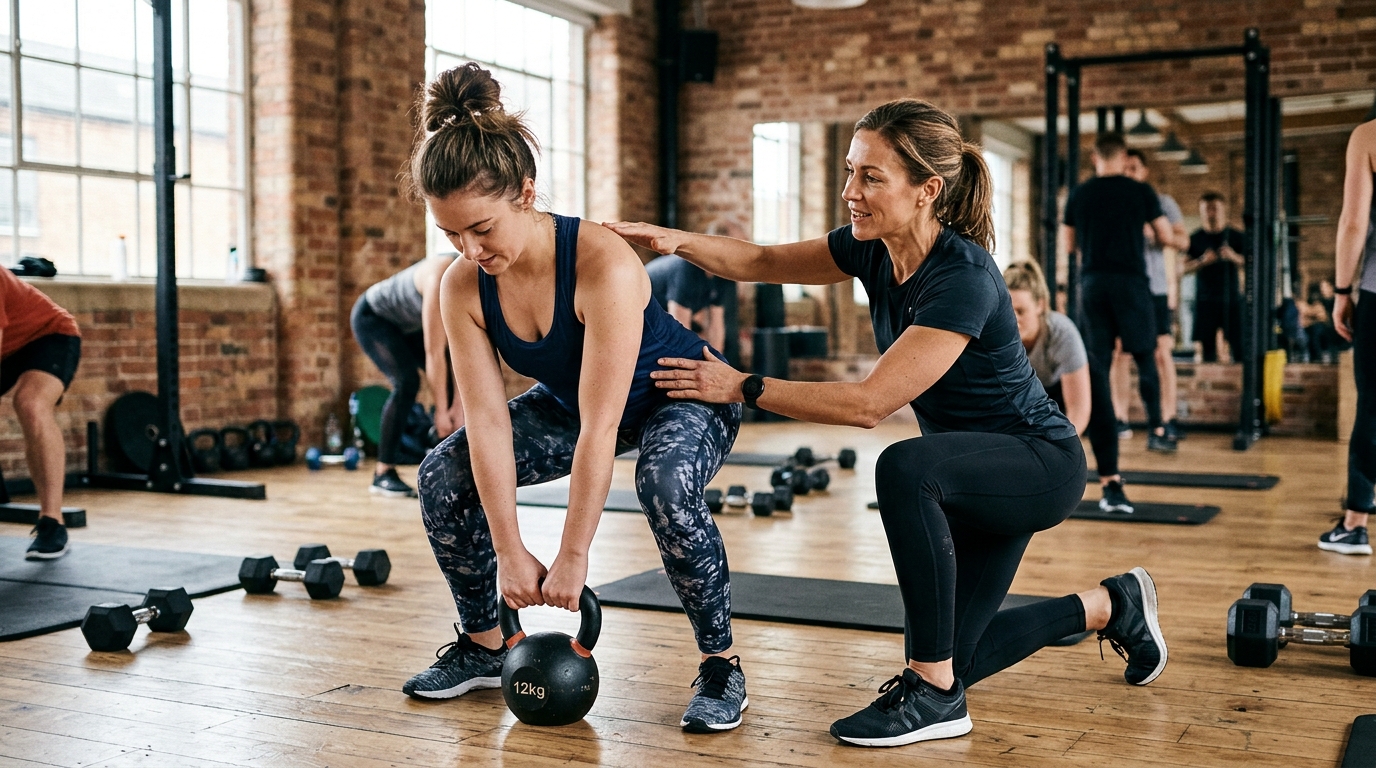
Graduating with a certificate is the beginning, not the finish line. The most successful fitness professionals spend their initial months deliberately practicing coaching cues, observing experienced mentors, and learning how to communicate with people of varying fitness levels.
Key practical skills that differentiate great coaches include:
- Active listening during initial consultations rather than imposing rigid assumptions.
- Immediate error detection and offering clear, single-point coaching cues.
- Adapting an exercise immediately if a client experiences joint discomfort.
5. Employed vs Self-Employed Routes
New fitness professionals generally choose between two primary operating models:
Employed Gym Instructor / Coach: Provides predictable hours, paid workplace benefits, and immediate access to hundreds of gym members. Ideal for gaining experience without commercial overheads.
Self-Employed Personal Trainer: Involves paying gym rent (or operating from a private studio) and running your own business. Offers higher earning potential and scheduling flexibility, but requires marketing, financial management, and client retention skills.
Marcus Vance
(Editorial Lead)Head of Fitness Education & Curriculum Lead
Experienced fitness educator with over 14 years in vocational exercise training, biomechanics instruction, and professional mentor development across the UK.
Frequently Asked Questions on This Topic
Do I need prior qualifications to begin fitness education?
No. You can start with foundational Gym Instructor training, which assumes no prior formal sports science qualifications.
How long does it take to become a qualified personal trainer?
Depending on the study mode (part-time blended vs intensive), most students complete their education within 8 to 24 weeks.
Can I work immediately after completing my course?
Once you receive your course completion certificate and obtain professional indemnity and public liability insurance, you can practice legally in the UK.
Academic & Professional Sources
- Professional Standards for Personal Training and Gym Instruction — Chartered Institute for the Management of Sport and Physical Activity (CIMSPA) (2023)
- ACSM Guidelines for Exercise Testing and Prescription — American College of Sports Medicine (2021)
- The UK Health and Fitness Market Report — LeisureDB (2024)
Personal Trainer Education
Develop practical coaching mastery with our structured curriculum in personal trainer education.